


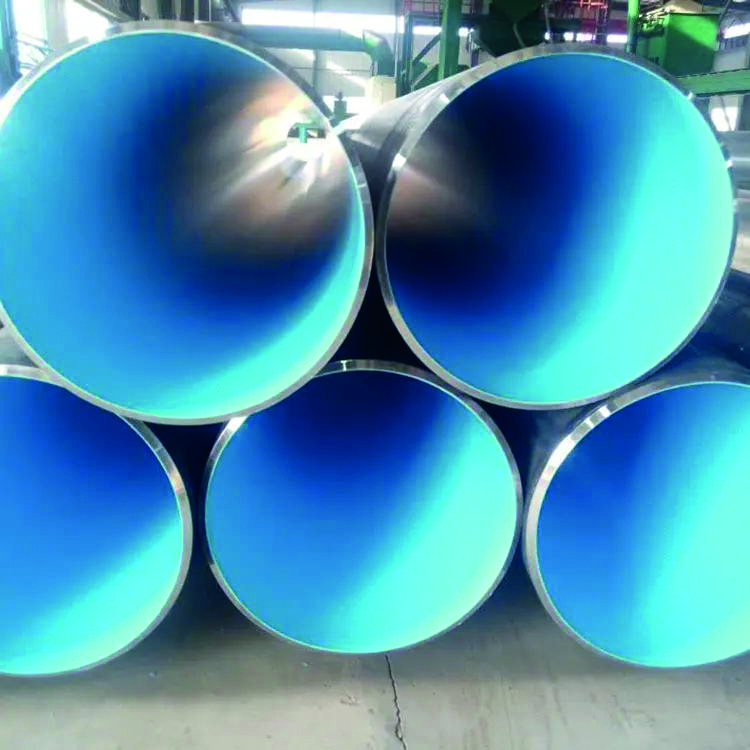
Three Top Layer Polyethylene Protection
Three top layer polyethylene protection is one method for oil & gas Corrosion Protection – Underground pipeline protection. In today’s world, production of various petroleum products, such as petrol, diesel, compressed gas (CNG), and several other hydrocarbons, decide the economy of a country.
Pipelines are the integral part of oil and gas industry. After exploration of crude/gas from sea, it is transported to distribution terminal thru’ under sea pipelines and from this terminal, then the crude is transported to storage tanks, refineries and petrochemical plants, and the gas is transported directly to utilities such as power plants, fertilizer plants, homes, hotels and industries. Pipelines, therefore, are the essential component of the oil and gas production. In order to assure the safety of the people and environment, utmost care is taken, while designing, commissioning and operation of these pipelines. Pipeline safety issues are directly related to the inner or outer surface of the pipe. Internal safety, on the other hand, is directly related to the quality of crude oil and natural gas and the condition or preparation of internal surfaces to avoid issues such as resistance to fluid flow. External surfaces bring greater safety concerns, mainly related to corrosion of pipes by various terrains. So transporting crude oil/natural gas by pipeline is a very big problem today and has become multidisciplinary and huge expenditure. In order to make pipelines safe, involving steel metallurgy, pipeline design, internal flow characteristics of fluids, health monitoring, maintenance, corrosion management and pipeline integrity.
Selection Of Protective Coating For Underground Pipelines
Coatings are natural choice to create a barrier for the corrosive environment in soils. Over the years, there have been different coating materials and formulations used to protect pipelines. For example, in the 1940s and 1950s, coal tar, wax, and vinyl tape were used; in the 1960s, asphalts were used; and in the 1970s to the present day, fusion-bond epoxy (FBE) was and is being used. Polyethylene (PE) tape and extruded PE jacket material also have been used from the early 1950s to the present day. Though there are many types of coatings that have been applied on buried pipelines, the three main coatings commonly used for pipelines are coal tar, FBE coating, and three-layer PE (3LPE) coatings. It is important to discuss the salient features of these coatings, while extensive information on the same can be found elsewhere.
3 Layer Polyethylene/Polypropylene (3LPE/3LPP) coatings are capable of withstanding a wide variety of temperatures and environments and as a result 3LPE and 3LPP are the industry standard coatings for the transmission of oil and gas via buried pipeline.
Share:

Leave a Comment